Showing posts with label repentance. Show all posts

Thursday, April 13, 2017

Personal Reflection & Repentance: Bitterness

The heart knows its own bitterness, and no stranger shares its joy. - Proverbs 14:10

In the Scripture bitterness is almost always connected with suffering. It is a sign of not suffering well. Great suffering lead Naomi to declare rename herself Mara (Bitter).

Bitterness is called a "poisonous root." Another reality the Scripture shows us is that bitterness leads to self-reliance. The author of the Hebrews pairs together the root of bitterness with the rebellion of Esau.

See to it that no one fails to obtain the grace of God; that no “root of bitterness” springs up and causes trouble, and by it many become defiled; that no one is sexually immoral or unholy like Esau, who sold his birthright for a single meal. For you know that afterward, when he desired to inherit the blessing, he was rejected, for he found no chance to repent, though he sought it with tears. - Hebrews 12:15-17

But, it doesn't stop there. Bitterness has effects on this around us as well. Proverbs 14:10 talks about others not sharing in the heart's joys due to bitterness. Hebrews warns of it defiling "many." Moses warned the congregation of Israel to avoid it (Deut. 29:18-19).

God's answer to those caught in the tangle of the poisonous root? Christ is the Gardener!

“I am the true vine, and my Father is the vinedresser. Every branch in me that does not bear fruit he takes away, and every branch that does bear fruit he prunes, that it may bear more fruit. - John 15:1-2

First, bitterness may be rooted suffering, but suffering may also be it's cure
. Pruning is not a pleasant process, but Jesus promises to prune us so that we might produce fruit. All of our suffering is working to conform us into the image of Jesus. In fact, according to Romans 8:28-30, all things are.

Second, bitterness is a worship problem.
Over and over the Bible points the bitter, through Christ, to worship the Lord.

But you have come to Mount Zion and to the city of the living God, the heavenly Jerusalem, and to innumerable angels in festal gathering, and to the assembly of the firstborn who are enrolled in heaven, and to God, the judge of all, and to the spirits of the righteous made perfect, and to Jesus, the mediator of a new covenant, and to the sprinkled blood that speaks a better word than the blood of Abel... Therefore let us be grateful for receiving a kingdom that cannot be shaken, and thus let us offer to God acceptable worship, with reverence and awe, for our God is a consuming fire
.
 - Hebrews 12:23-25, 28-29

Third, bitterness is a forgiveness problem.
We are called to forgive as God has forgiven us. This requires a proper recognition of our condition and Christ's kindness.

The cross and Resurrection is the greatest example of kindness mankind has ever experienced.

Let all bitterness and wrath and anger and clamor and slander be put away from you, along with all malice. Be kind to one another, tenderhearted, forgiving one another, as God in Christ forgave you. - Ephesians 4:31-32

Kindness softens the bitter heart. Paul writes that the "kindness of God leads us to repentance" (Romans 2:4-5).

Fourth, bitterness has bitter results. We are warned that those who persist in bitterness are met with separation from God! Recall Moses warning to the Israelites,

Beware lest there be among you a root bearing poisonous and bitter fruit...The Lord will not be willing to forgive him, but rather the anger of the Lord and his jealousy will smoke against that man, and the curses written in this book will settle upon him, and the Lord will blot out his name from under heaven. - Deut. 29:18, 20

Bitterness has been a besetting sin in my life for the past 2 years or so.

But, in God's kindness, He is breaking the hold of bitterness on me.  One day at a time.

This breaking involves repentance. I repent to all who are reading this of my bitterness. First and foremost, my repentance is toward God (Psalm 51), but I also recognize that healing comes from confessing out sins to one another (James 5:13-18). I come to say I'm sorry. I come to find healing.

Pray for me in these things. That God would continue to break me and that I would keep my eyes on his kindness toward me. Psalm 130:7 describes the kindness of the Lord this way,

"For with the Lord there is steadfast love, and with him is plentiful redemption."

That kind of kindness shatters the hold of bitterness. Praise God.

Saturday, January 7, 2017

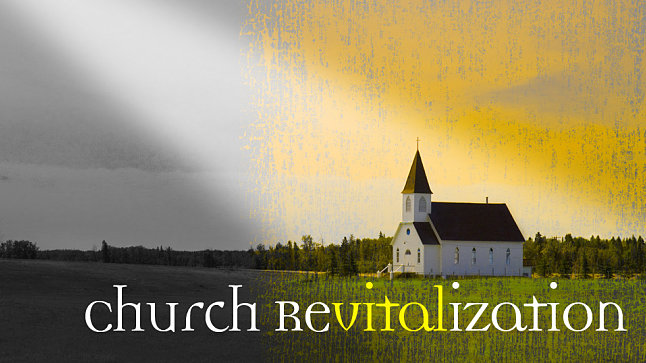
Some Reflections on Church Revitalization

From here
“I don’t want to serve in a dying church.”  My jaw dropped as I heard a pastor friend retell this story.  He recounted the story of how someone had decided to stop filling in as the music leader at a small country church.  They played a role on the music team of their much larger home church, and didn’t see a point in serving as a music leader at a much smaller country church 15 minutes down the road. 

As a pastor of a church that is far more similar to the latter than the former, I was dumbfounded.  Stories like this are not unfounded.  There a massive misunderstanding, especially among younger believers, about “dying” churches.  The Bible speaks a different word over these churches.

First, the title “dying” next to any church is a denial of the gospel.  Yes, while I know what they mean, if there are believers in any church than it is by definition a “living” church.  Ephesians 2:5 says, even when we were dead in our trespasses, [Christ] made us alive together with Christ—by grace you have been saved.”  No church is a dying church because every church contains people made alive by the gospel.

Now, certainly we need to be put a title on the type of church we are talking about.  Often times by “dying” many are meaning to say “declining.”  Certainly spiritual life and numerical decline are different.  Also, there are studies that show that the majority of churches are in decline, not able to grow at a pace equivalent to the surrounding area.  Decline is not just something that affects the tiny country church, it’s just has a faster effect on them.  

Also, the term “unhealthy” could be used.  Often times there are churches are overrun with unbiblical traditions, whether with their membership, leadership, or practices.  Certainly these traditions could be having a negative effect.  While "unhealthy" is a better term than "dying", and gets more to the point than "declining", it doesn’t address everything that can be happening to a church.  I know many churches who are healthy in terms of their membership and leadership, but are far from impacting their community.

I propse that the term “distracted” better displays the reality of what is taking place in most churches.  Yes, they are in decline.  Yes, they are unhealthy.  But, ultimately this is due to distractions.  This could be doctrinal distractions (liberalism), or practical distractions (traditionalism) or a mixture of the two.  Ultimately, all distraction in a church is a distraction of affection.  Jesus speaks to a church in this same situation in Revelation 2:4, “But I have this against you, that you have abandoned the love you had at first.” 

The goal of church revitalization is to restir affections toward Jesus and toward His Word.  Once a church is more in love with Jesus than with prior commitments (doctrinal or practical) then transformation can begin.  Jesus speaks in John 15 of this reality, I am the vine; you are the branches. Whoever abides in me and I in him, he it is that bears much fruit, for apart from me you can do nothing.”  To see the fruits of transformation in the life of our people, they abide in Jesus, and they cannot do this without their affections resting on Him.

How do we do this?  Here are 5 reflections...

First, we need faithful preaching.  Pastor, I know it is tiring, but continue to preach faithfully.  Exalt Jesus.  Lift Him up.  They need to see the one they are to love as lovely.

Second, evaluate where the churches affections rest.  What “golden calf” do they have?  What areas of church life will be a battle to see transformation in?  When those are evaluated, make immediate changes in areas that can be changed without a battle (for us, this was leadership and membership).  Once those changes are made, and the benefits are seen, you will be in a better position to see future transformation.

Third, set your focus on the long-term.  I know I am one who cares far more about the short-term comforts of life (this is a reality I am repenting over as we speak).  But, Abraham set his eyes on his heavenly home (Hebrews 11:17).  His eyes were to the long-term, which was how he endured through the short-term discomforts.  In fact, every single biblical figure lived this way, why should the pastor be any different?

Fourth, pastor, get friends.  You may feel alone, but you are not alone.  Form networks and fellowships with other pastor's in your area.  You need brothers to cry with, to pray with, to bounce advice off of.  Especially if you are without a plurality of leaders, get friends!  Spurgeon said “Friendship is one of the sweetest joys of life. Many might have failed beneath the bitterness of their trial had they not found a friend.” 

Fifth, be willing to confront the golden calf.  I will write more about this in a future post


Church revitalization is not easy, but it is necessary.  We must give ourselves toward transformation.  This will require humility and unity- we need people of all ages!  In a future post, I implore young people to plug into church revitalization and address other issues that I have seen in the past two years of working with church revitalization.